Saturday, 22 February 2025

The Starling (birds of East Finchley, part 3)

Continuing with my bird-by-bird look at the avian life of East Finchley (and yes, we will get to the finches at some point!), I’m looking at Starlings this time. Glossy black and speckled (more so in the autumn), and rather gregarious, the Common Starling (Sturnus vulgaris, also known as the European Starling in North America) always strikes me as being a winter bird even though it is in fact a resident here in Britain. 

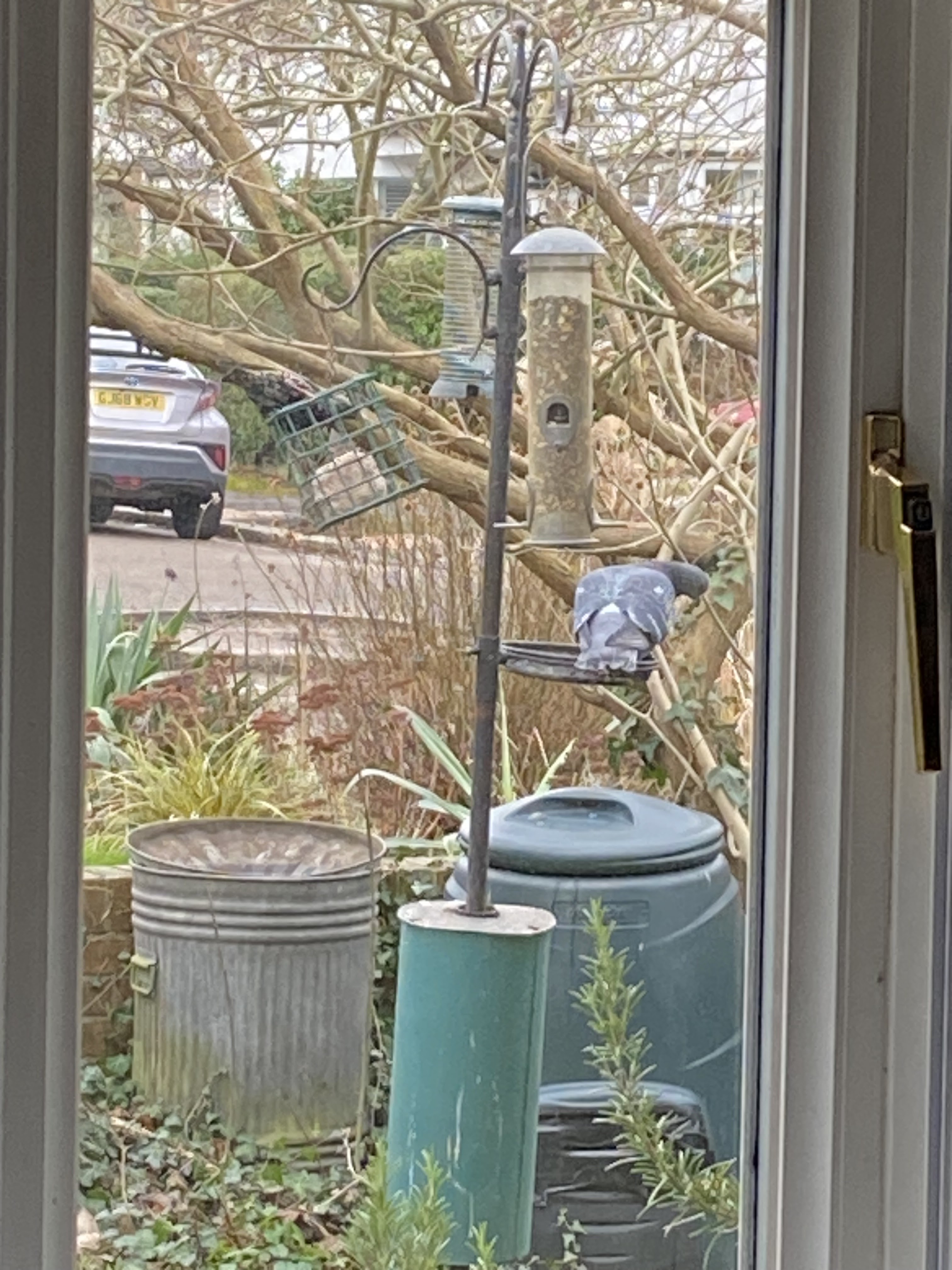
It’s also on the RSPB’s red list according to my bird book (the RSPB Handbook of British Birds, 2021 edition) as the British Starling population has experienced a strong decline, although from what I can see (ie. Starlings most days when I go for a walk or look at the feeder in my front garden) they’re a regular sight. Unlike the smaller birds that visit, they’re not afraid of the parakeets!


Numbers have actually declined in much of Western Europe over the past few decades, due largely to changes in farming meaning that there are fewer invertebrates for them to feed on. Worldwide, though, they have been deemed to be of Least Concern by the International Union for Conservation of Nature (this being what you see when you look up a bird species on Wikipedia). They were introduced into North America in the nineteenth century, notably in 1890 when a chap called Eugene Schliffen released sixty of them in New York’s Central Park, although the notion that he had a plan (sorry, couldn’t resist!) to introduce every bird species mentioned in the works of William Shakespeare into the US appears to be an urban myth. 

Back here in Britain, the Starling is a resident bird s as though numbers do indeed swell in the winter as we get an influx of visitors from Scandinavia and Eastern Europe. 

Starlings are the great mimics of the bird world. Their song (and it’s mostly the males who do the singing) can be melodical and it can be mechanical, and they can imitate other birds as well as man-made sounds like car alarms. A general rule of thumb that I have with birdsong is that if I can’t figure out what it is, it’s safe to assume that it may be a Starling.

Perhaps that’s why I hear a lot of Starlings!

I cannot mention Starlings without mentioning murmurations — those close-formation swarms of large numbers of flying Starlings, synchronised yet random in terms of direction. It’s a sight to behold but I have only ever seen it once, at dusk on the seafront at Aberystwyth (where, incidentally, there’s a pub called the Starling Cloud, although that’s quite a way inland; best pub in Aber is the Glengower which is right on the esplanade). It was quite the sight! How, I wonder, are they able to do that?

Friday, 31 January 2025

January round-up

A quiet month, mostly seeing what I could see in East Finchley. A few good sightings — a Coal Tit and a male Blackcap came to the garden feeder in addition to the regular visitors like Starlings, Ring-necked Parakeets, Blue Tits and Feral Pigeons. Further afield in East Finchley, there were a few Magpies and Robins, and the House Sparrows of Kitchener Road are in good voice. Most populous were the Starlings, their numbers do swell in the winter.

The one birding trip beyond London N2 was to Brent Reservoir for the local RSPB group’s monthly walk, where 29 different species were seen — Coots, Black-headed Gulls and Tufted Ducks galore, more Common Gulls than we had any right to expect and a few Teal, some elusive Pochard and a solo Little Grebe.


In total, 37 species seen this month. A slow but steady start to 2025. 


Monday, 27 January 2025

Big Garden Birdwatch

 I always make sure that I take part in this annual RSPB event, and I never usually have much to report as a result. Back when we lived in a flat above the shops on the High Road, I would go and do the requisite hour in Cherry Tree Wood, which I always felt was a bit of a cheat but the RSPB has always said that people who don’t have gardens can do that. Now that we have a garden (make that gardens, plural, as we have a front one and a back one) I can watch the feeder from either the table or the armchair, and as far as the Big Garden Birdwatch is concerned, the morning of the Sunday is my preferred time to do it.

Before settling down to start recording who visited, I had to attract the birds, of course. I’m out of peanuts but there are the remnants of a suet block out there, and I also had more seed mix (supermarket bird seed mixed with nijer seeds) and some kitchen scraps (cheese rind) to put out. What suburban bird could resist?

Clearly not a Woodpigeon, who swooped in early and gobbled up all the cheese. 

Next up, a Feral Pigeon (one of three) who looked around for anything the Woodpigeon might have missed, and unlike said Woodpigeon he was OK with sharing the feeding-station with a Starling. Add to that a Magpie on the ground, and that was that.


Not much, all told. Although as the RSPB’s website told me after I uploaded my results, it’s all part of a much bigger picture.


I’d like to add the Blue Tit, Great Tit and make Blackcap who visited this morning, but that really would be cheating!


Tuesday, 31 December 2024

2024 highlights

Looking back on the year, as you do at this time, several birding highlights stand out for me.

First, by some distance, was a trip to Wales in May, during which I went on a boat trip out of Tenby, going around Caldey Island. Just off Caldey is St Margaret’s Island, which is home to a large seabird colony. There were Cormorants, there were Guillemots, there were Razorbills, there were Kittiwakes — but best of all, there were Puffins. It wasn’t the first time I’d done that boat trip, but it was the first time I have ever seen Puffins, and that made the whole thing worthwhile. They had abandoned the island a few years ago thanks to a rat infestation (as they nest in burrows atop cliffs, Puffins are very vulnerable to this), but they have returned although they’re now using rock fissures which precludes this particular colony (only a handful of breeding pairs) from expanding. Puffins have been on my birding wish-list for a while, so getting to see them was incredibly gratifying. 


I’ve been to Suffolk a couple of times this year. While there in March, I went to Minsmere (one of the finest RSPB reserves in the country) and had a wonderful time. No Bitterns, alas, but in one of the hides a volunteer pointed out a rare sighting indeed — Lesser Scaup. Had I not had the benefit of his wisdom, doubtless I would have logged it was a funny-looking Tufted Duck! Only afterwards did it occur to me that I should have asked how he knew it was that and not a regular Scaup (which is still rare but at least it has its own page in the RSPB Handbook of British Birds (fifth edition), unlike the Lesser Scaup which is listed in tye ‘Rarities’ section at the back.

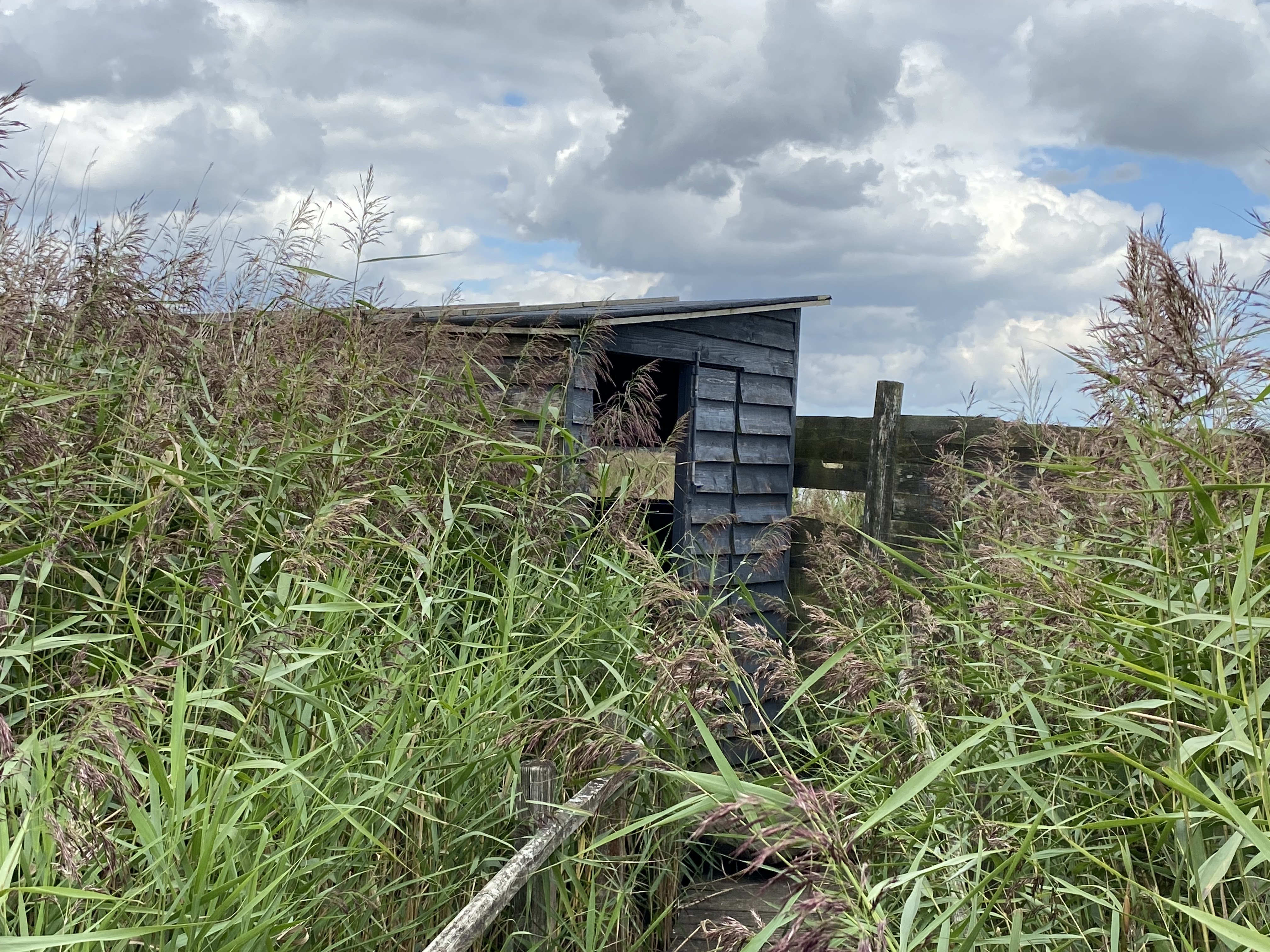
In September I was back in Suffolk, staying at Southwold. While there, I went for a few bike rides, exploring some of the local churches as well as birding. The highlight in terms of the latter was a Yellow Wagtail in the fields between Southwold (the town) and Southwold Harbour, and six Spoonbills on the Blyth Estuary (specifically, seen from the bird hide a short walk out of Blythburgh; said hide contained an abandoned Swallow’s nest, interestingly enough). 


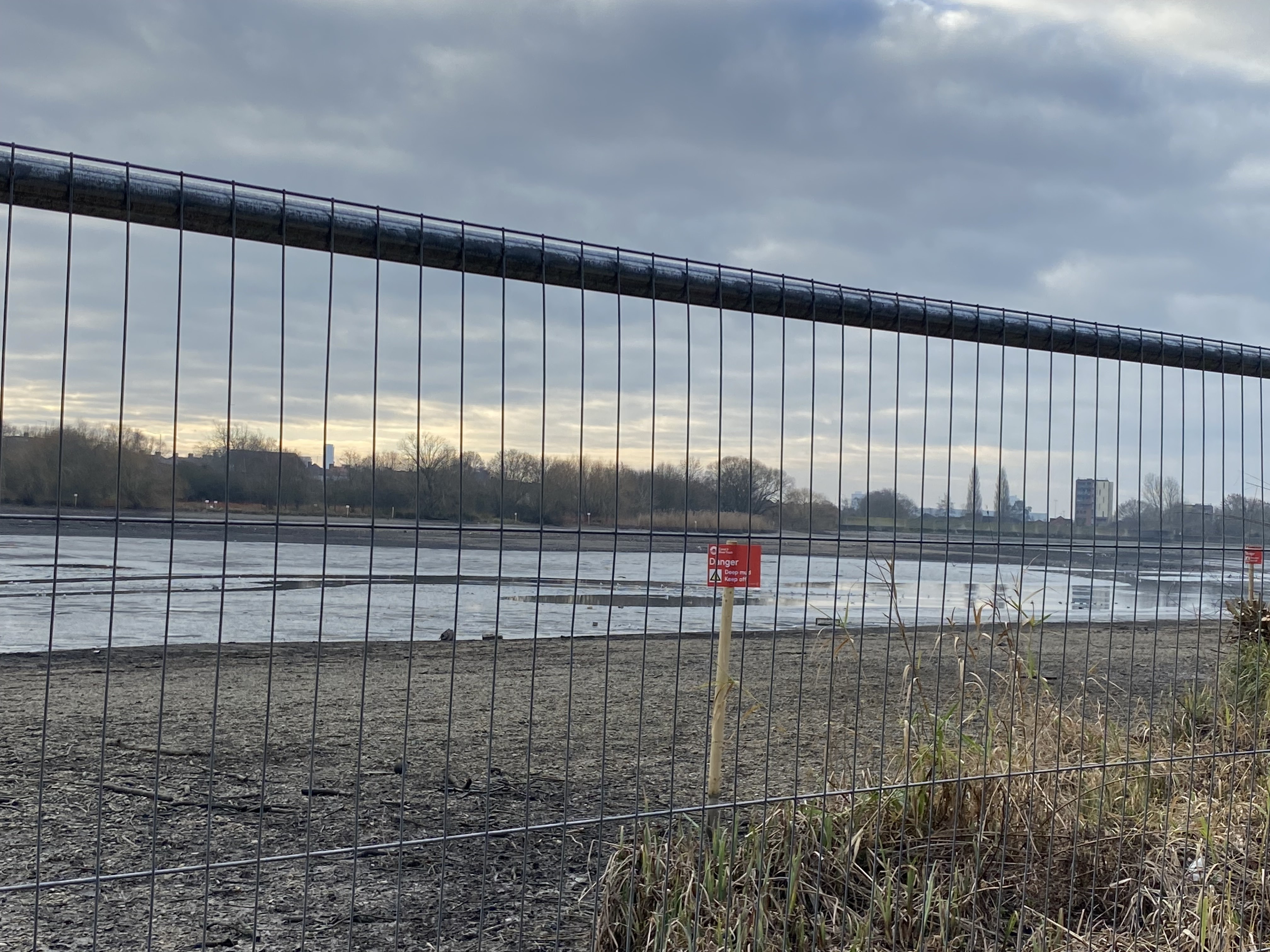
Closer to home, the bird walks at Brent Reservoir with my local RSPB group yielded some good sightings. The reservoir itself was drained earlier this year, and as a result we saw Water Rail and Snipe from the hide, as well as a the head of a Tawney Owl poking out from a tree-hollow and a Peregrine perched atop a nearby block of flats. I would like to do these walls more often, if my diary allows!


In Barcelona in a sweltering July, I visited the amazing Sagrada Familia, an amazing building which, from a purely birding perspective, is home to Crag Martins which nest in the towers! Also in Barcelona were many Monk Parakeets, which (unlike the Ring-necked Parakeets we get here in London) are originally from South America. 


And then, in October, there was Canada, of which the birding highlight had to be the Hawk Watch in Toronto’s High Park.

An enjoyable birding year! I look forward to seeing what 2025 brings. 

Monday, 30 December 2024

December round-up


Not a bad month, birding-wise.

Only one excursion, to the East India Dock Basin early in the month. Other than that, I’ve kept it local!

Locally, quite a few sightings, and plenty of action on the feeder — Stalings, Blue Tits, Goldfinches, Great Tits, the occasional Coal Tit and (inevitably) Ring-necked Parakeets, with Feral Pigeons and Woodpigeons going for whatever falls to the ground. As well as peanuts and suet blocks, we have some regular assorted bird seed into which I am mixing extra nyjer seeds. The latter is very popular, and is usually finished within a day or so! The squirrel-baffler continues to do its job. 


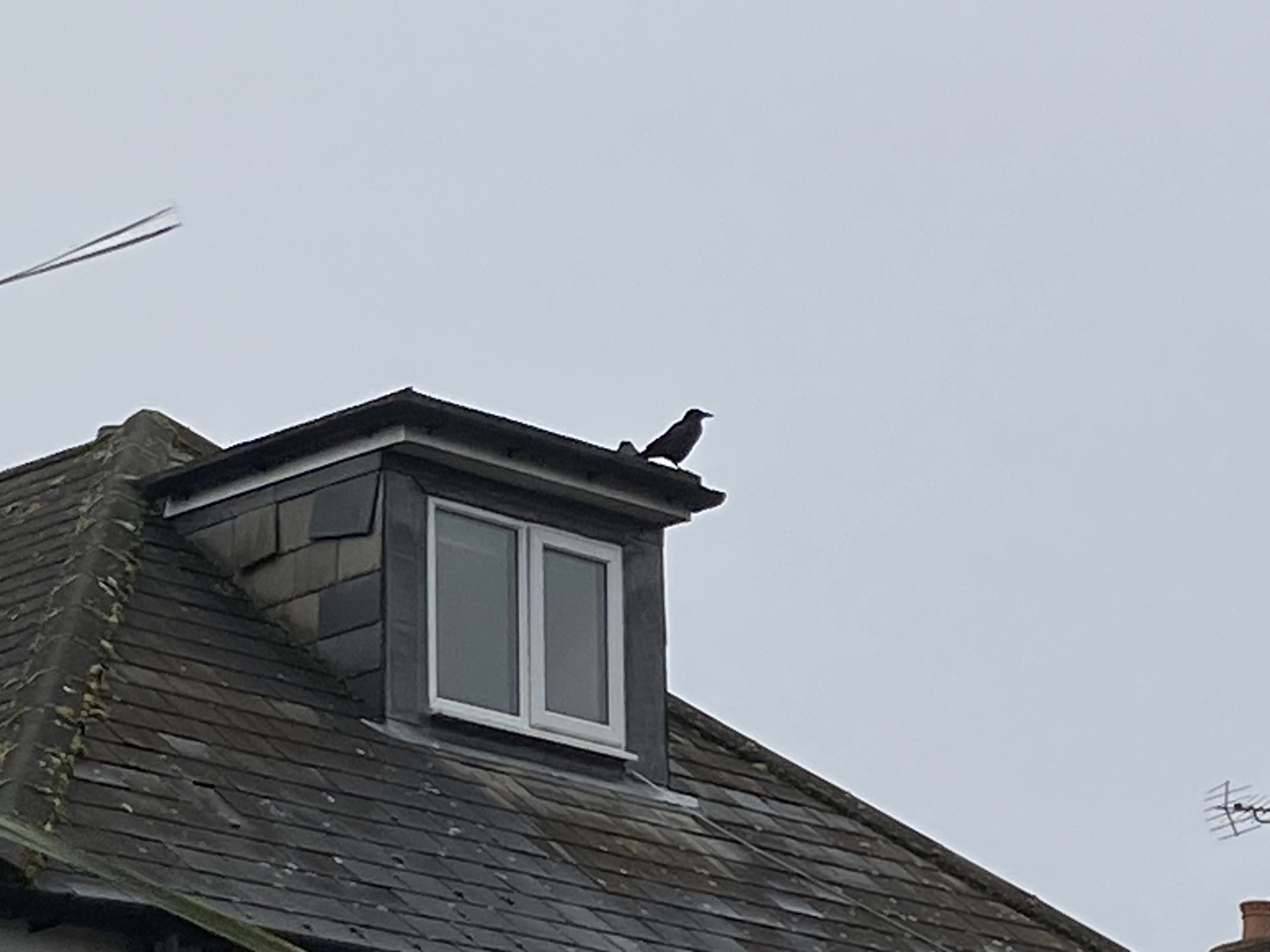
Elsewhere in East Finchley, there have been what I like to call the regulars — Carrion Crows, Magpies and overflying Black-headed Gulls in addition to the above. Lots of Starlings in the trees, and a very obliging Robin near the Tube station who hung around for long enough for me to take a photo, with the surrounding branches framing him rather well.


Redwings continue to be spotted, and I’ve seen a couple of Pied Wagtails near the cafe in Cherry Tree Wood. There was the occasional Jay, and a male Blackcap a few Long-tailed Tits. 

Finally, a trip out to the Cotswolds for work added Red Kites, Pheasants, Rooks, Jackdaws and a Buzzard on my sole trip beyond the M25 this month!

As the year reaches its end, my mind wanders back to the birding highlights of 2024, looks forward to new birding adventures in 2025 and contemplates the unread bird-related books on my shelves!


Saturday, 28 December 2024

The Black-headed Gull (birds of East Finchley, part 2)

I continue with the Black-headed Gull, or Chroicocephalus ridibundus to use its Latin name. No reason, it was just the next one that came to mind. This has been a common sight inland as well as by the coast for as long as I’ve been watching birds. To me, it’s one of those birds that always seems to be, well, just there

These are the ones that are as common a sight in cities as they are in the countryside, where they follow the ploughs so see what’s been turned up, and they also frequent rubbish dumps as well. They’ll forage anywhere, it seems, which probably explains why you’ll see them just about anywhere.


The first thing everyone who’s into birds knows about these gulls, of course, is that they don’t actually have black heads. Their heads are in fact brown, but only in the summer. Quite why they were not named as being brown-headed I do not know, although there is another (closely related) species of gull called the Brown-headed Gull which can be found in Asia. That said, our Black-headed Gull was classified first so it can’t be said that they got their name because the more accurate one was already taken. The best explanation I’ve found is that they look black from a distance, although that doesn’t really make sense, especially when you consider that there are three more gull species which actually do have black heads (and that’s just limiting it to the gulls listed in British bird books; elsewhere in the world, there are others). 


Anyway, these small gulls can be encountered in most locations, usually in groups and especially in the winter months when their numbers in Britain, already considerable, swell with visitors from continental Europe. In the winter, of course, their heads are neither black nor brown, but white with what looks like a slight smudge behind the eye. 

They always seem like quite sociable birds to me, by which I mean that they’re usually seen in groups. I may see individual ones flying overhead, but when they’re on the ground they almost always seem to be in groups. Big groups, more often than not; Many is the time when I have resorted to simply writing “lots” in my notes after the entry for “BH gull”.


Their call always reminds me (for some reason) of the noise made by a group of children when they’re all trying to talk at once, leading all of them to be louder in order to make themselves heard. Everyone has something to say, at the same time! The bird book renders it as kree-aaa, which sounds somewhat harsh to me as I think their call, even when there’s a lot of them, comes across as less harsh than that of the larger gulls.


In East Finchley I can almost guarantee that I will see them in the local park, Cherry Tree Wood. Not in particularly big groups, though, as said park is fairly small in the grand scheme of things (and it only gets a water feature on a temporary basis, when it’s been raining a lot).


I think that Black-headed Gulls are, like Feral Pigeons and Carrion Crows and Starlings and Magpies, the sort of birds we tend to take for granted, purely because they’re always around, and usually in large numbers. Maybe it’s a good thing that there are some species of bird that can be regarded thusly. 


Their numbers, especially in terms of the ones who come here for the winter, have apparently slightly declined over the past few years (which is probably why the RSPB has them on the ‘amber’ list). The residents population is stable, though, so hopefully they’ll be around, with something to say, for a while yet.

Friday, 20 December 2024

The Robin (birds of East Finchley, part 1)

One thing I’ve noticed about birdwatching is how it’s the rarities that get all of the attention, which leads the birds you see every day to be overlooked. I’m guilty of this myself; going through my notes of what I’ve seen this year, the stand-out ones are a Lesser Scaup that was pointed out to me at Minsmere (I regret not asking the volunteer how he knew it was that and not a regular Scaup), the Puffins on St Margaret’s Island on the boat trip out from Tenby (a first-time sighting of these wonderful birds for me) and the various birds that you don’t get in Britain which I saw in Barcelona and Canada. All some way from East Finchley! So I thought I should turn my attention to the everyday birds, one at a time.

By everyday birds, I mean the ones on my ‘home’ patch, East Finchley. Since I’ve logged over thirty different species in East Finchley during the last couple of years, that ought to keep me occupied for a while. 

Since it is nearly Christmas, I shall begin with a bird I see more often than not on my wanderings around my local neighbourhood — the Robin (Erithacus rubecula). I’ve even got pretty good at identifying them by sound (which has long been my birdwatching weak spot although what with that Simon Barnes book, hopefully that will improve). That said, it’s pretty much a given that if a songbird is making a noise really early in the morning, chances are it’s a Robin. I saw one this morning, singing in a tree near our front garden. 


The same goes for birdsong in the winter months. Songbirds tend to sing mostly in spring, when they’re trying to attract a mate; by contrast, Robins sing in the winter too; since the bathroom window is permanently slightly open in our house, I usually hear them while I’m shaving in the morning, even when it’s still dark outside. As it happens, they only go (comparatively) quiet at the height of summer, when they’re moulting, but come autumn they’ve started up again and are in full voice when winter kicks in. 

Perhaps that’s a reason for why the Robin has become the bird we Britons associate with Christmas. Look at the cards; sooner rather than later, you’ll get to one with a Robin on it. 


Robins often feature on British Christmas cards (and tea-towels and various seasonal decorations). There are some interesting explanations for this that go beyond the fact that Robins are vocally active in the winter months. Perhaps appropriately for Christmas, Jesus is involved. 

Legend has it that a Robin sang to Jesus to comfort him as he was dying on the cross, and it got marked with his blood as a result (funnily enough, it’s not the only bird that was supposedly there at the Crucifixion, as we shall see when we get to the Goldfinch). I also recall being told a story about how Robins were present at the Nativity, where they also sang to Jesus; in this version, they got their red breasts by being scorched from a fire that Joseph (being a practical sort of bloke) lit in the stable to keep everyone warm. From an ornithological perspective, these stories are justified as the Robin’s range does extend to the Middle East (although both stories seem to be uniquely British in origin). 

Moving away from Christianity, Robins are also associated with Thor, the Norse god of thunder. We also get Robins in the traditional folk-story Babes in the Wood. In the realm of myth and legend, the Robin certainly does get around!

There could be a more mundane explanation for the association with Christmas cards, though. Christmas cards first became popular in the mid-nineteenth century and Robins appear to have been depicted early on. In Victorian times, postmen wore red jackets and were nicknamed “Robins” as a result, so the Robin on the Christmas card could (also?) symbolise the postie who delivered it.

Culturally, the Robin also pops up on the badges of three English football teams that I can think of (all of which play in red, naturally). Although Britain does not officially have a national bird, the Robin has been unofficially recognised as such not once but twice — once when The Times did a vote on this subject in the 1960s, and again in 2015 when David Lindo, a.k.a. the Urban Birder, organised a nationwide poll. 

Internationally, our Robin (Latin name: Erithacus rubecula) is known as the European Robin, presumably to distinguish it from the American Robin; both birds have red breasts but the similarities end there. In terms of classification, our Robin is an Old World chat, while theirs is a New World thrush (and isn’t associated with Christmas; over there, the bird you’ll most likely see on the cards is the Northern Cardinal). 
Which again indicates the cultural significance of the (European) Robin, as the early settlers doubtless named the American bird in honour of the one they remembered from back home.