Showing posts with label rewilding. Show all posts

Sunday, 22 June 2025

Red Kites

It’s more or less impossible not to see Red Kites flying overhead while driving on the motorways to the west of London these days. These distinctive birds of prey, recognisable by their forked tails, have become a ubiquitous sight but it was not always so, for they are one of British nature’s great success stories of the past forty years. 


When I was a kid, the bird books all said that the Red Kite (Milvus milvus) had been hunted almost to extinction in Britain, and the only place you had a chance of seeing them was in the hills of central Wales where a few pairs still bred. They’d been a common sight in London in Tudor times, when they were disliked (Shakespeare used the word “kite” as an insult) but tolerated because, being primarily scavengers, they helped to keep the streets clean of carrion (dead animals). In the centuries that followed, though, they were treated as vermin and hunted accordingly, until by the twentieth century they only existed in their Welsh stronghold. 

This changed in 1989, when a rewilding project started in the Chilterns. A few birds (some from Wales, some from Scandinavia) were released — and since then, they’ve thrived, especially along the M4 and M40 corridors. The reason? The motorways, mostly; they provide a lot of roadkill, and as Red Kites eat mostly carrion, that’s why they can be seen soaring above them. 

They have since spread out along the major roads; in the past couple of months, I’ve seen them while driving along the A1 in Northumberland and the A2 in Kent. I even saw one when I went to Spain earlier this year. 

So often do I see them while driving that they have become one of my favourite birds. I have yet to see one within the North Circular, but I presume it’s only a matter of time before I do. 


Thursday, 29 May 2025

Kentish Choughs…?

I first saw a Chough a few years ago, in Cornwall. These elegant members of the crow family, recognisable by their glossy black plumage and red beak and feet, started to recolonise the clifftops of Cornwall in the early twenty-first century after an absence of many years. It’s the county bird there, due in part to its association with the King Arthur legend. Officially speaking, the Chough of which I talk is known as the Red-billed Chough, and it’s pronounced “chuff”. Although I knew the bird when I saw it, I only knew it from books and had to ask someone how it is pronounced. 

The Chough also has associations with Kent. Somehow, it also became involved in the legends surrounding Thomas Becket, the Archbishop of Canterbury who was murdered in his own cathedral in 1170 — one of the most notorious events in English history, which led to Canterbury becoming a major pilgrimage destination in the Middle Ages. Some time after his murder and subsequent canonisation, Becket was retrospectively given a coat-of-arms depicting three Choughs, and this in turn has become the coat-of-arms of the City of Canterbury. 

Quite why a clergyman who was born in London and died in Kent should have a Cornish bird associated with him is unclear; according to legend, one of them is supposed to have wandered into Canterbury Cathedral shortly after the murder. 

I’ve been to Kent a few times for work over the past month, visiting Canterbury and also Dover, principally the castle as far as the latter is concerned but also taking in the National Trust’s site atop the White Cliffs, just along from the castle which is managed by English Heritage. 

The views from the White Cliffs are amazing — the Port of Dover is laid out before and below you, Dover Castle (witter the church and the Roman lighthouse distinct from the central keep) on the horizon and the prospect of seeing France (just 21 miles away) on a clear day. It’s usually windy though! In terms of birds, there are plenty of gulls (particularly Herring Gulls) and crows (particularly Jackdaws), but also Blackbirds and Robins which are quite vocal and on one occasion I spotted a male Kestrel hovering in the wind, visible from the visitor centre. 


And then there are the Choughs.

A very recent rewilding project has seen Choughs from Cornwall being reintroduced to the chalk cliffs of Kent, where they died out over two centuries ago as a result of habitat loss and persecution. With the chalk grassland having been restored in recent years through the work of organisations like the Kent Wildlife Trust and the National Trust, the habitat to support them in Kent is in place. A chick was hatched last year and managed to fledge, but was sadly lost in strong winds. Rewilding always has its ups and downs, but as was the case from my visit to Edinburgh the other month, it’s great to see that efforts are being made on a local level the country to help give nature as good a future as it can have. 

I’m told that the best place to see the Kentish Choughs is in the area between the White Cliffs car park and the castle, and although I have yet to lay eyes on them in Kent I remain optimistic that I will do so at some point. Early morning is the best time apparently, although as I’m on a schedule for my visits to Kent I’m not usually there until the afternoon! 

Friday, 4 April 2025

Waders and rewilding in Edinburgh

This week I went up to Edinburgh for work. Usually I stay in the New Town, which is lovely, but this time (mainly because I drove up rather than took the train), I stayed down by the old docks on the southern shore of the Firth of Forth. Rather like London’s Docklands, Edinburgh’s dock area has undergone significant redevelopment in the past few decades; the former industrial dock area now boasts modern apartment blocks and so on. Leith has, by all accounts, been gentrified. 

I was staying at the approximate point where Leith meets Newhaven. As I was there for work and work is further along in Granton, my commute became a rather nice seashore walk.  I was glad I took my binoculars and bird book.


Down on the shore were various waders; those very distinctive Oystercatchers, a dozen Knots in winter plumage (surely a bit late for them?), a few Turnstones looking for food among the gulls, a couple of Redshanks and a few small ones which weren’t Turnstones. Waders aren’t my strongest suit by any means, but I was determined to figure out what these ones were. Black legs and bill, grey-brown back, white underparts. Dunlin, I reasoned — like the larger Knots, still in their winter plumage. 

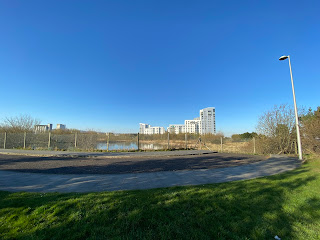
Close to my hotel was Lighthouse Park, located on the small peninsula of land that was originally the western breakwater for one of the docks that comprises the Port of Leith. By the early twenty-first century this was the site of some property development comprising of apartment blocks, presumably rather pricey. This development, called Western Harbour, stalled in 2008 as a result of the financial crisis, with some of the planned sites undeveloped save for some access roads and half-dug foundations. Fascinatingly, nature has taken over at these places, now known as the Western Harbour Ponds. I spotted a Mute Swan, a pair of Mallard and many Goldfinches. 

Fenced off, these areas have rewilded — what were would-be building sites are now a cluster of small wildlife havens, within easy reach for local residents keen to appreciate nature. Two of them are in fact ponds, while the other two are wooded. Alas, a sign on one of the fences proclaimed that they are currently at risk — property developers are once again interested in the area, for obvious reasons. But it looks as though some local people would like to keep the Western Harbour Ponds as they currently are — and a good thing too. Green spaces are an important thing in the modern city. 


The Friends of Western Harbour Ponds website describes the Ponds as “a wonderful example of urban rewilding — a haven for native plant life, insects, bats and waterfowl … It has also become a very special place place for local residents and birdwatchers, who come to reconnect with nature, watch the wildlife and enjoy the tranquility of this ad-hoc blue-green space in an otherwise densely populated part of the city”. This visitor from London certainly enjoyed a few moments of tranquility before walking to work. I signed the online petition on the spot.

But my birding was not over yet! Looking out to sea, I saw something white and swimming. Another gull? There are many, many Herring and Lesser Black-backed Gulls around! But this looked to be something different. Always worth a closer look. Good job I brought my binoculars. 

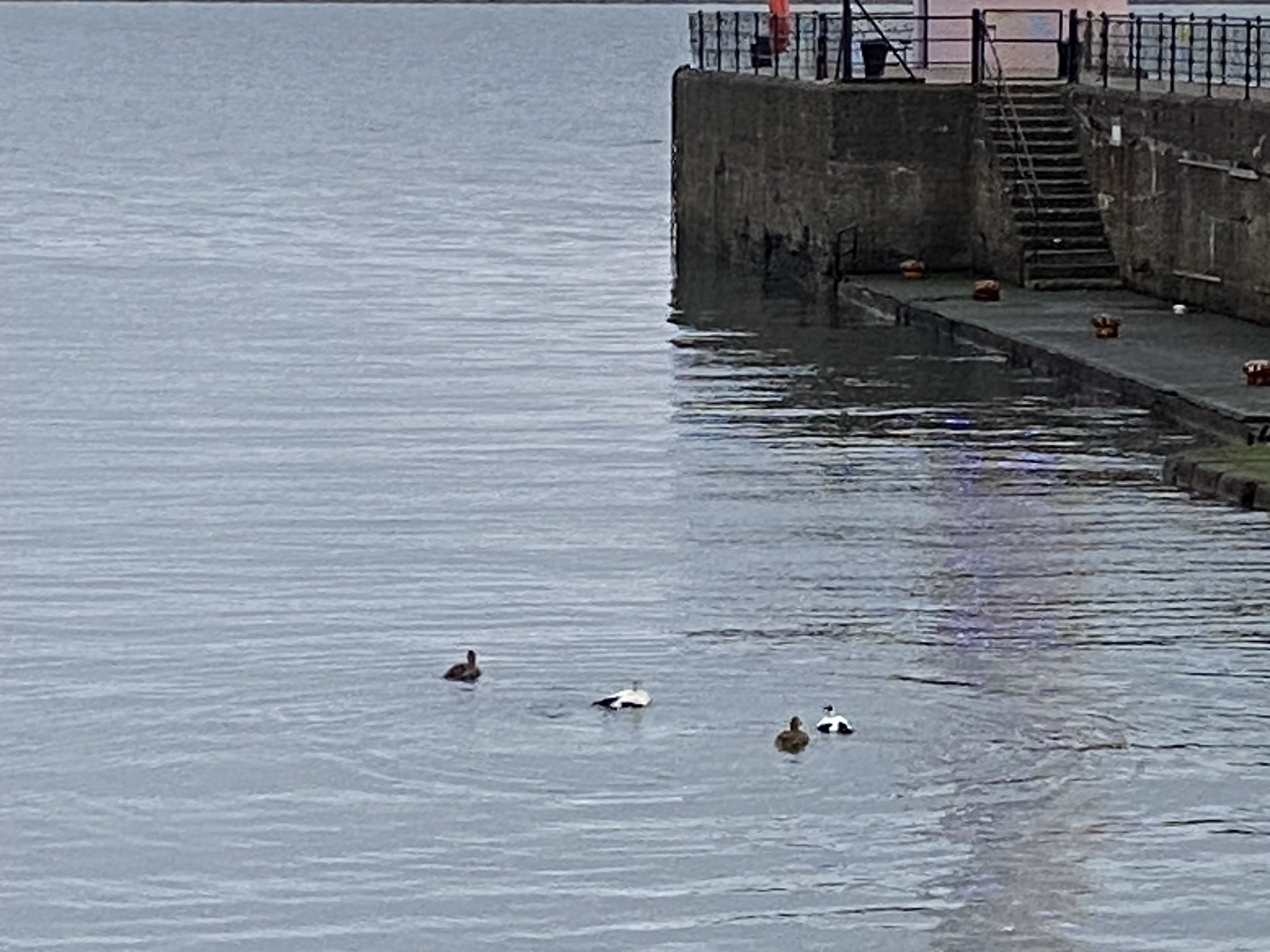
Turned out, it was a male Eider! Fantastic spot. His female counterpart surfaced while I was looking. I have only seen Eiders once before, and that was a couple of years ago and not far from Edinburgh (just along the coast at Yellowcraig Beach), but I had not thought I’d see a pair at Leith docks. The following morning, just to show that this was no one-off, there were two pairs of Eiders swimming in Newhaven Harbour. 


A rewarding visit to a part of Edinburgh not previously explored! An area I’d definitely like to return to; I just hope that the Western Harbour Ponds will still be there when I do. 

Sunday, 10 November 2024

Birding in Canada

Last month Allison and I went on holiday to Canada. We had a lovely time visiting friends and relatives in Manitoba and Ontario, saw the Northern Lights (a first-time sighting for me, and they were spectacular) — and I had the chance to get some birding in. 


Birding in another country is always fun because it offers the (always exciting) chance to see birds I wouldn’t see at home. Birding on another continent takes it to another level! 


That said, I got a good spot in before we even took off from Heathrow Airport. Glancing out of the window as the plane taxied towards the runway, I saw a female Kestrel hovering over the grass, mere yards from the tarmac. 


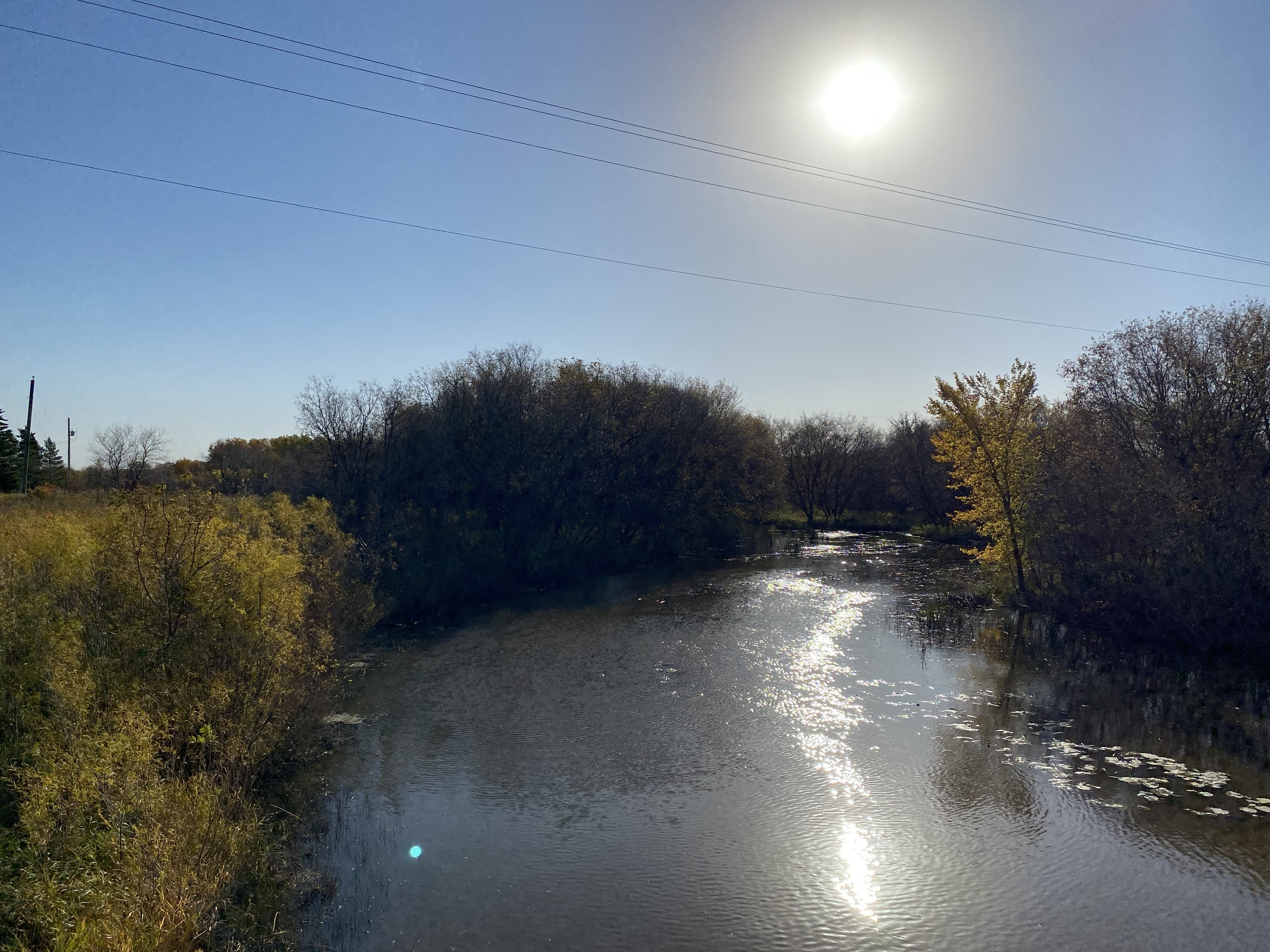
In rural Manitoba I managed some good sightings, including a couple of lifers like White-crowned Sparrows and a lovely-looking Eastern Bluebird in addition to the birds I’ve seen there on previous trips — Blue Jays, Dark-eyed Juncos, American Crows and many, many Canada Geese. Most impressive was a Bald Eagle soaring overhead. My first thought was: “surely not?” — but as it turns out, it’s well within their range, and what else could it have possibly been? Another lifer!


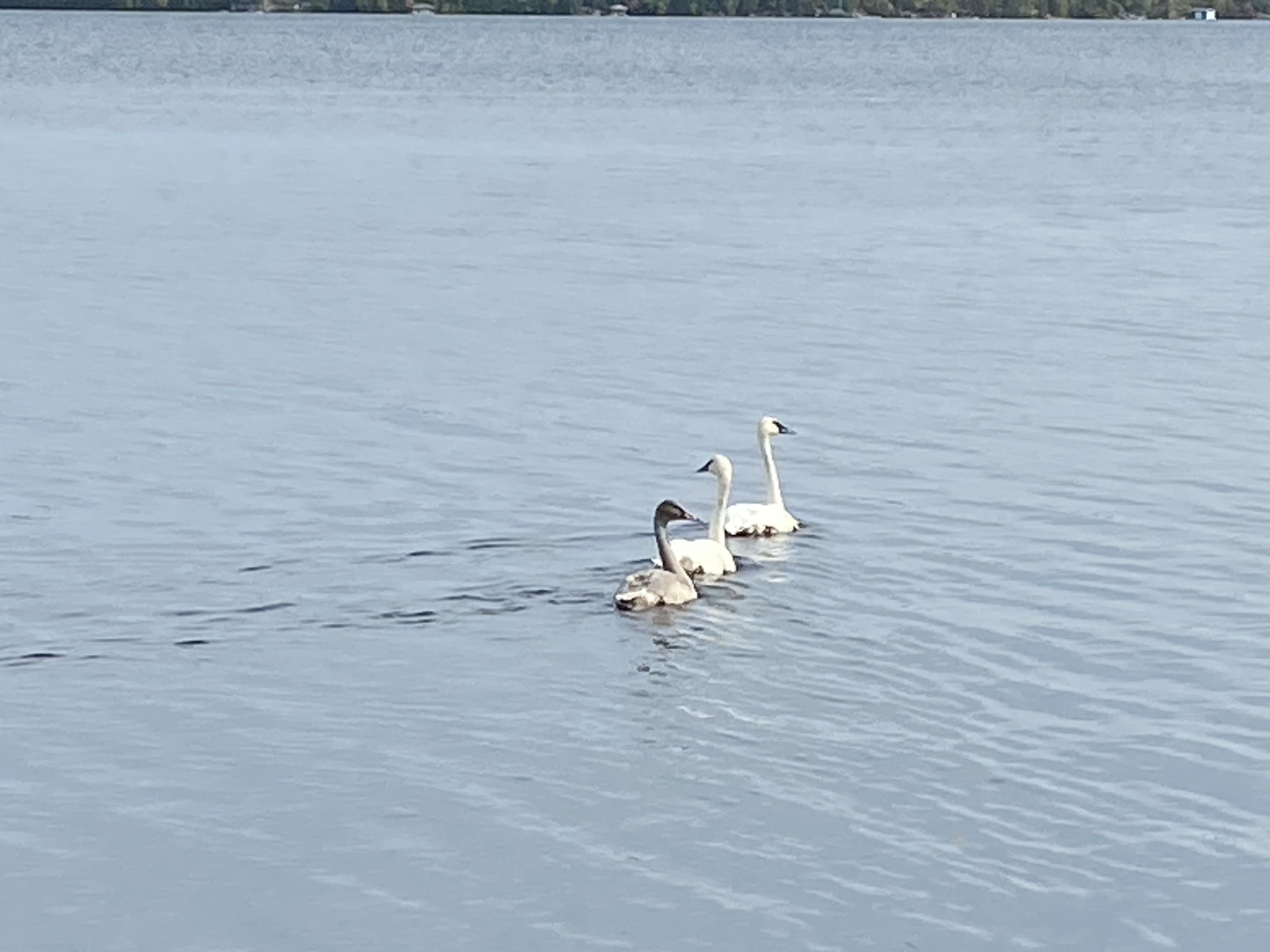
To Ontario next, for a few relaxing days at the cottage in Muskoka. I was happy enough with the Common Loons on the lake (it doesn’t feel like a trip to the cottage without a loon sighting), but a family of swans (two adults and a cygnet) added another new species to my life list — they were Trumpeter Swans, a species native to North America. My Canadian field guide (DK’s Birds of Canada, published in 2005) suggested that Ontario is not in their range, but there has been a rewilding project involving these birds in the past few years in the Georgian Bay area. One of them even had a visible tag number — L55, for the record. Also seen was a Golden Eagle overhead — again, I was sceptical at first, but that was what it was. Size aside, you can tell by the primary feathers sticking out as it soars (not that I’d ever seen one before, but years of studying field guides has its rewards). 


In Toronto, I spent a few hours walking around High Park. Located to the west of the downtown area, High Park is Toronto’s largest public park and has an outdoor theatre, a zoo, various sporting facilities, a museum and a few hiking trails. 


It’s also great for birding. My walk around there yielded a total of 17 species — some of them European imports like House Sparrows and Mallards, but most of them native North American birds like Black-capped Chickadees, Dark-Eyed Juncos (lots of those), a couple of Hermit Thrushes and — as in Manitoba — a lone Blue Jay.


Best of all, though, was the fact that the Hawk Watch was going on atop the appropriately-named Hawk Hill, just north of the Grenadier Restaurant which was where I had an excellent lunch. The Hawk Watch is the observation of migrating birds of prey takes place in every day in High Park throughout autumn — Toronto being on most birds’ migration routes south (birds heading south tend to follow the shoreline when they get to Lake Ontario), and the hill in the middle of High Park being an ideal spot from which to watch them. It’s one of very few raptor monitoring sites to be located in an urban environment. 


The friendly volunteers were happy to admit this foreigner into their midst and point out sightings that I’d other wise have missed: Sharp-shinned and Red-tailed Hawks, two-dozen Turkey Vultures and — repeating the Manitoba experience — a couple of Bald Eagles. There was also a Red-bellied Woodpecker that I would otherwise have had no chance of identifying. 


Bird-related chat centres upon plans to rename any species that got named after an eighteenth- or nineteenth-century naturalist, a big project that’s not without its detractors; there are those who still aren’t happy with the Grey (or is it Gray?) Jay being officially renamed the Canada Jay back in 2018 (either way, I’ve yet to see one of these). Commenting on how many House Sparrows I’d seen, I mentioned that they were in decline back home — and was told that I was welcome to take some home with me!


After leaving the Hawk Watch people, I  spotted a very small bird, in the restaurant car park no less. It looked like a Goldcrest but was in fact my first-ever Golden-crowned Kinglet, a close relative of our Goldcrest and one of the smallest passserines in North America. 


All in all, my Canadian holiday yielded a total of thirty species, of which eight were lifers.